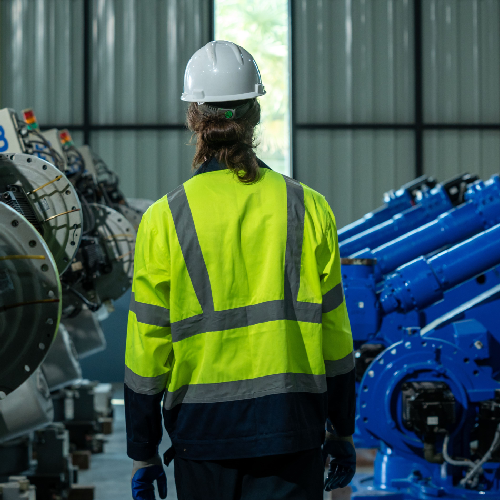
If you have ever spent five years managing large-scale capital projects in heavy industry, you know the feeling. It usually hits around 3:00 PM on a Tuesday. You are standing in the middle of a bustling fabrication shop—surrounded by tons of structural steel, massive CNC milling centers, and the deafening screech of plasma cutters. On paper, the master schedule says Unit 4 should be in hydrostatic testing right now. In reality, the main structural sub-assembly is still stuck waiting on a custom-machined flange that someone forgot to release from engineering three weeks ago. Meanwhile, five highly paid welders are leaning against a worktable, scrolling through their phones because their bay is blocked by a massive pressure vessel shell that cannot move until tomorrow’s crane shift.
That is the day-to-day reality of heavy equipment manufacturing. It is noisy, capital-intensive, high-stakes, and notoriously unpredictable.
For decades, the heavy industrial sector operated under a comfortable, albeit flawed, assumption: “We are not assembling smartphones on a tiny conveyor belt. We build custom, giant, complex machinery. You can’t apply Toyota assembly line tricks here.”
That assumption has cost the heavy manufacturing sector billions of dollars in schedule overruns, liquidated damages, and wasted labor.
The truth is that Lean manufacturing is not about mass-producing lightweight plastic widgets. At its core, Lean is a philosophy of flow, value, and waste elimination. And nowhere is flow more fractured—or waste more expensive—than in custom heavy equipment projects.
In this deep dive, we will explore how applying Lean principles fundamentally changes the delivery of massive mechanical equipment projects. We will break down the mechanics of waste, look at practical frameworks for heavy shops, and explore how industry leaders like PROINMEC leverage operational discipline to turn late deliveries into a thing of the past.
The Heavy Industry Paradox: High Complexity, Deep Waste
To understand why heavy equipment manufacturing projects struggle with delivery schedules, you have to examine the nature of the beast. Unlike high-volume consumer manufacturing, heavy engineering and fabrication deal with unique constraints:
+-----------------------------------------------------------------------+
| TRADITIONAL HEAVY MANUFACTURING TRAPS |
+-----------------------------------------------------------------------+
| 1. "Every project is a prototype" mindset -> High rework rates |
| 2. Massive physical footprint -> High transportation & inventory cost|
| 3. Unsynchronized engineering & procurement -> Shop floor bottlenecks |
| 4. Batch-and-queue mentality -> Stagnant work-in-progress (WIP) |
+-----------------------------------------------------------------------+
When you are manufacturing large-scale industrial assemblies—such as heavy mining crushing units, pressure vessels, automated conveyors, or custom structural frames—the physical scale masks massive operational inefficiencies.
The Myth of the "Unique Project"
The most common pushback against Lean in heavy fabrication is: "Everything we do is custom." While the final engineering drawing for a heavy machine might be unique, the processes used to build it are surprisingly repetitive. Cutting, beveling, fitting, welding, machining, blasting, painting, and assembling are foundational steps across every project.
When organizations hide behind the "custom project" label, they tolerate chaos. They accept that engineers will release drawings late, that raw steel plates will sit in a yard rusting for four months before being touched, and that welders will spend 30% of their day hunting for lifting slings or grinding disks.
The Hidden Price of Work-in-Progress (WIP)
In a heavy industrial facility, Work-in-Progress (WIP) takes up immense physical space. When a shop floor is crammed full of partially welded frames, half-machined shafts, and unpainted skids, two bad things happen simultaneously:
- Physical Flow Collapses: Cranes cannot move efficiently. Forklifts spend extra time navigating around stagnant metal. The shop floor becomes a hazardous, overcrowded maze.
- Financial Capital Freezes: Tens of thousands of dollars in raw materials and direct labor sit idle, earning zero return while delaying cash flow collection tied to project delivery milestones.
Unmasking the 8 Wastes in Heavy Equipment Manufacturing
In classic Lean theory, Taiichi Ohno identified seven core wastes (Muda), later expanded to eight. In high-volume car assembly, waste looks like a line operator reaching two inches too far for a bolt. In heavy mechanical fabrication, waste looks like a 50-ton overhead crane sitting idle while a crew spends three hours searching for an approved welding procedure specification (WPS).
Let us translate the 8 Lean Wastes into the specific context of heavy equipment manufacturing:
|
Waste Type |
What It Looks Like in Heavy Fabrication |
The Delivery Impact |
|
1. Defects / Rework |
Weld inclusions failing NDT inspection; out-of-spec machining on a large flange; paint thickness violations. |
Massive schedule delays; expensive material scrapped; emergency engineering change notices (ECNs). |
|
2. Overproduction |
Cutting and pre-fabricating sub-components months before the main assembly bay is ready to receive them. |
Cluttered shop floor space; high risk of engineering revision changes ruining completed parts. |
|
3. Waiting |
Fitters waiting for crane availability, material release tags, quality control (QC) sign-offs, or RFI answers. |
Lost direct-labor efficiency; idle shop hours that blow past budgeted hours. |
|
4. Non-Utilized Talent |
Experienced fabricators spending hours moving raw plate, cleaning work bays, or doing manual paperwork. |
Morale erosion; reduced throughput of high-value skill sets (e.g., certified ASME welders). |
|
5. Transportation |
Moving a 15-ton structural frame across four different bays for cutting, welding, machining, and painting. |
Rigging risk, overhead crane bottlenecks, potential physical damage during transit. |
|
6. Inventory |
Buying thousands of feet of specialized structural tubing or raw alloy plate months before fabrication starts. |
Capital tie-up; damaged materials; lost or misplaced small components (fasteners, fittings). |
|
7. Motion |
Machinists walking 200 feet across the facility to find a specific cutting tool, crane remote, or measuring tool. |
Cumulative fatigue; hundreds of lost labor hours per project cycle. |
|
8. Extra-Processing |
Over-welding beyond design specifications "just to be safe," or grinding unexposed non-critical seams to a polished finish. |
Unnecessary consumable costs; added heat distortion risk; inflated labor time per unit. |
When you look at project delays through this lens, you realize that late deliveries are rarely caused by a single catastrophic failure. They are caused by the slow, compounding accumulation of these small, daily operational friction points.
Core Lean Frameworks Applied to Heavy Industrial Projects
Now that we have diagnosed the disease, how do we treat it? Applying Lean to heavy mechanical equipment manufacturing requires adapting classic principles into robust, project-oriented frameworks.
Value Stream Mapping (VSM) from Contract to Site Commissioning
In heavy industry, the Value Stream does not start when plate hits the CNC plasma cutting table. It starts the moment a contract is signed.
A comprehensive heavy-industry Value Stream Map (VSM) tracks two parallel streams:
- The Information Flow: Bid handoff $\rightarrow$ Detailed Engineering (3D CAD/FEA) $\rightarrow$ Bill of Materials (BOM) Generation $\rightarrow$ Procurement $\rightarrow$ QC Test Plan Approval.
- The Material Flow: Raw Material Receiving $\rightarrow$ Primary Processing (Cutting/Machining) $\rightarrow$ Sub-Assembly Fitting $\rightarrow$ Welding $\rightarrow$ NDT/QC $\rightarrow$ Surface Prep & Paint $\rightarrow$ Final Mechanical/Electrical Assembly $\rightarrow$ Factory Acceptance Testing (FAT) $\rightarrow$ Logistics & Shipping.
By mapping both streams, heavy manufacturers often discover that a 12-week manufacturing delay was actually caused by a 4-week gap during the engineering-to-procurement handoff.
5S and Shop Floor Organization for Heavy Manufacturing
Some plant managers laugh at 5S (Sort, Set in order, Shine, Standardize, Sustain) because they think it only applies to small benchtop operations. But in a heavy machining and structural shop, 5S is a crucial safety and efficiency backbone:
- Sort: Clear out old, bent fixtures, scrap cut-offs, and abandoned tooling from major assembly bays.
- Set in Order: Establish shadow boards for heavy rigging gear (slings, shackles, spreader bars) right at the crane stations. Place tooling carts directly adjacent to large CNC boring mills.
- Shine: Keep floor markings clear for crane travel corridors and designated staging zones for completed parts.
- Standardize: Standardize job-traveler document pouches and digital inspection check-stations across every fabrication cell.
- Sustain: Conduct daily 5-minute visual sweeps before shift handoffs.
When a 10-ton piece of steel is hanging from an overhead crane, nobody should be hunting around for an hour trying to find a rated lifting lug or a clean torque wrench.
Tact-Time and Line Balancing in Custom Fabrication
Can you set a Takt time (the required pace of production to meet customer demand) when building a custom 30-meter mining conveyor system?
Yes, but you calculate it differently. Instead of measuring Takt time in seconds per piece, heavy project managers calculate Milestone Takt Times for major sub-assemblies.
By breaking down a complex heavy assembly into modular work packages, you can balance shop cells. For example, if Module A requires 100 hours of fitting/welding and Module B requires 30 hours, running them through the same bay without balancing creates immediate bottlenecks. Lean heavy manufacturers use cellular layout principles—grouping equipment and skilled labor into dedicated, process-aligned cells (e.g., Heavy Structural Cell, Precision Machining Cell, Skid Integration & Piping Cell).
Engineering-Driven Lean: Concurrency and Modular Design
You cannot fix on the shop floor what was broken on the engineering drawing board. More than 70% of a heavy machine’s final production cost and manufacturing lead time is locked in during the design phase.
Design for Manufacture and Assembly (DFMA)
Lean heavy engineering relies heavily on DFMA principles:
- Standardization of Hardware and Raw Sections: Instead of specifying four different wall thicknesses of structural tubing across a single machine frame, engineers standardize on one or two structural sizes. This reduces material ordering complexity, lowers inventory costs, and simplifies welding procedures.
- Minimizing Weld Volume: Weld metal is expensive, and heat input causes structural distortion that requires time-consuming torch-straightening. Lean engineers design bent-plate profiles or rolled sections that replace multi-pass weld joints with clean structural bends.
- Poka-Yoke (Error Proofing) in Fabrication: Designing mounting brackets with asymmetric bolt patterns or alignment keyways so parts can physically only be assembled in the correct orientation. This eliminates upside-down or reversed sub-components on the shop floor.
Concurrent Engineering over Waterfall Handoffs
Traditional project management relies on waterfall handoffs: Engineering finishes 100% of the 3D model, then releases the complete Bill of Materials (BOM) to procurement, which buys the steel, which then arrives at the shop floor.
Lean heavy manufacturers use Design-for-Flow Concurrent Engineering:
- Long-Lead Releasing: Forgings, custom gearboxes, specialized alloys, and heavy hydraulic power units (HPUs) are identified and purchased directly from initial 3D conceptual layouts.
- Modular BOM Release: Instead of waiting for the entire project design to be finished, engineering releases structural bases first, allowing primary cutting and welding to start while detailed electrical and piping layouts are finalized.
Bridging the Gap: The Role of Digital Lean (Industry 4.0)
In modern heavy manufacturing, physical Lean tools are amplified by digital solutions. You cannot optimize what you cannot see, and heavy industrial plants are notorious for visual blind spots.
Digital Kanban and Real-Time Shop Floor Visibility
Physical index cards on a board do not work well when a project spans three different manufacturing facilities and two external heat-treatment vendors. Modern heavy shops utilize Digital Kanban systems integrated with their ERP/MES (Manufacturing Execution System):
- Touchscreen kiosks at machining and welding stations allow operators to see digital job travelers, latest drawing revisions, and material staging statuses instantly.
- When a welder finishes a sub-assembly, tapping "Complete" automatically triggers a material transport request for the overhead crane or transfer cart operator, cutting idle wait time.
Automated Material Nesting and Cutting Optimization
Primary material cutting (plate and beam) used to be a major source of waste. Modern software takes 3D SolidWorks models and automatically nests parts onto raw plate layouts to maximize material yield (often pushing plate utilization above 85–90%). Furthermore, direct integration between CAD and multi-axis CNC plasma, laser, or waterjet cutters ensures that bevels and weld prep edges are cut directly into the plate, eliminating manual angle-grinding.
How PROINMEC Demonstrates On-Time Excellence through Operational Discipline
When talking about applying Lean to large-scale mechanical equipment projects, theoretical concepts only get you so far. The real test is execution in demanding markets where missing a delivery date can halt an entire civil infrastructure project or mining operation.
This is where industrial leaders like PROINMEC exemplify how Lean principles translate into reliable delivery times.
Comprehensive 360° Engineering Integration
PROINMEC has built its operational model around an integrated, 360-degree engineering approach. By housing structural calculations, 3D SolidWorks design, precision CNC machining, electrical automation, and civil/industrial integration under a unified quality management umbrella, they eliminate the traditional communication silos that cause project friction.
PROINMEC'S INTEGRATED 360° FLOW
+-------------------------------------------------------------+
| 3D SolidWorks Design & Structural Calculations (DIALux/FEA) |
+-------------------------------------------------------------+
|
+-------------------------------------------------------------+
| Precision CNC Machining & Specialized Metal Fabrication |
+-------------------------------------------------------------+
|
+-------------------------------------------------------------+
| Industrial Automation & On-Site Installation Integration |
+-------------------------------------------------------------+
When an engineering change occurs on a complex industrial automation skid, PROINMEC’s internal alignment ensures that CAD updates feed directly into their CNC turning and milling workflows without setting off a domino effect of shop floor rework.
Precision Machining Meets Large-Scale Execution
One of the hardest Lean challenges in heavy manufacturing is managing the interface between large structural fabrication (which has wider tolerances) and precision CNC machining (which works in microns).
PROINMEC bridges this gap through rigorous process control. By deploying advanced CNC turning and milling capabilities alongside specialized structural welding, they ensure that critical bearing seats, shaft alignments, and flanged connections fit perfectly the first time during final assembly. This eliminates the dreaded "fit-up rework on the assembly floor" that plagues less disciplined fabricators.
Uncompromising Quality Control and Deadline Compliance
In heavy manufacturing, a project delivered fast is useless if it fails non-destructive testing (NDT) or functional Factory Acceptance Testing (FAT).
PROINMEC integrates quality checks directly into every stage of fabrication rather than relying solely on a final end-of-line inspection. By embedding Quality Control (QC) checkpoints into every job traveler, potential defects are caught immediately when the part is still in the machining cell or welding bay.
This relentless focus on process efficiency, continuous staff training, and rigorous quality standards allows PROINMEC to maintain an exceptional record for meeting strict project deadlines. Their approach proves that when you reduce operational waste, delivery speed and uncompromising quality naturally go hand in hand.