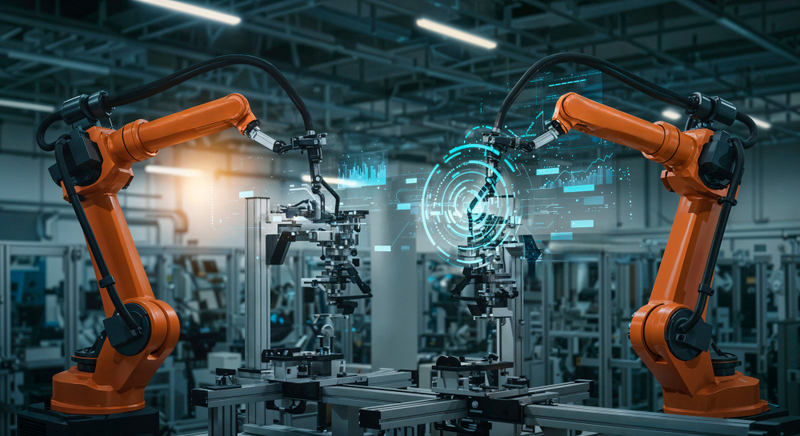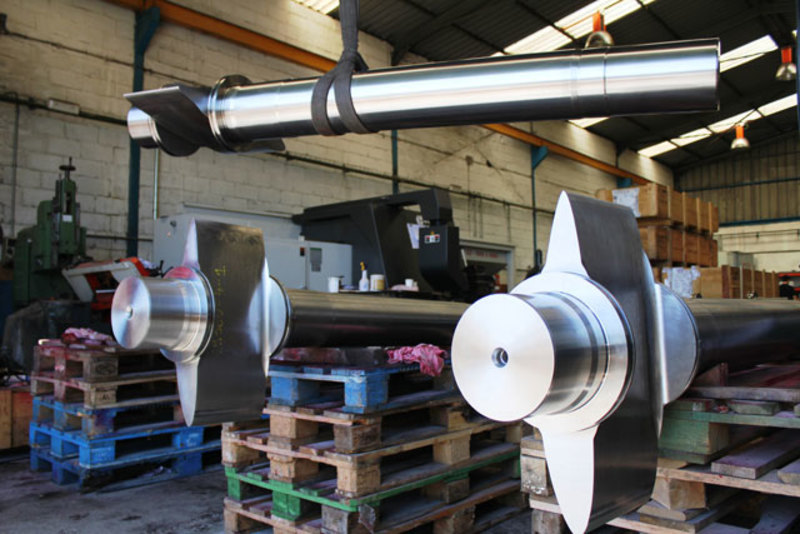
In the world of industrial manufacturing, technology has continuously evolved to provide better results in terms of precision, efficiency, and cost-effectiveness. One of the most revolutionary technologies that have transformed the manufacturing landscape is CNC (Computer Numerical Control) machining. This technology has proven to outperform conventional methods in heavy part manufacturing, offering a range of advantages that traditional methods simply cannot match.
What is cnc machining?
CNC machining refers to the use of computer-controlled machines to automate and streamline the manufacturing process. These machines are programmed with detailed specifications to precisely cut, shape, and fabricate materials such as metals, plastics, and composites. Unlike manual or semi-automatic processes, CNC machines operate under the guidance of computer software that ensures optimal accuracy and repeatability. This technology has become a cornerstone in modern manufacturing, particularly in industries requiring high-quality and large-scale production.
Precision and accuracy
One of the key benefits of CNC machining is its unparalleled precision. CNC machines are programmed with exact specifications, allowing them to produce parts with tolerances down to microns. This level of accuracy ensures that parts fit together perfectly, reducing the need for rework or adjustments.
In contrast, traditional manual methods, such as lathe machining or milling, are subject to human error. Even experienced machinists can make slight mistakes that affect the final product. Semi-automatic processes, though more accurate than fully manual ones, still lack the consistency and fine-tuning capabilities of CNC technology. With CNC machining, parts are produced consistently, with minimal variation between batches.
Efficiency and speed
CNC machines are designed to work around the clock, producing parts quickly and efficiently. Because they are computer-controlled, once the initial setup is completed, CNC machines can run autonomously, without the need for constant supervision. This results in faster production times and a significant increase in output compared to manual methods.
Conventional machining processes, on the other hand, are more labor-intensive and time-consuming. Operators must manually set up machines, monitor the process, and often intervene to fix issues. This not only increases the risk of human error but also results in longer lead times, which can be detrimental in industries where time-to-market is critical.
Scalability and flexibility
One of the major advantages of CNC machining over traditional methods is scalability. Once a CNC machine is programmed to produce a particular part, it can easily be adapted to produce multiple variations of that part or entirely different components. This flexibility makes CNC machines ideal for industries that require both high-volume and low-volume production runs.
Traditional machining methods, by contrast, often require retooling or significant changes to the setup for each new part design. This can lead to longer downtime, increased costs, and a slower response to changes in demand. CNC technology allows manufacturers to quickly shift between different designs, minimizing disruptions and enhancing production efficiency.
Reduction of errors and defects
In any manufacturing process, errors and defects are inevitable. However, CNC machining significantly reduces the likelihood of these issues. With manual and semi-automatic processes, operators can inadvertently make mistakes, such as miscalculating dimensions or failing to properly align the material. These errors can lead to defective parts, which must be scrapped or reworked, resulting in increased costs and delays.
CNC machines, on the other hand, are highly accurate and repeatable, making errors less common. The computer-controlled nature of CNC technology ensures that each part is produced exactly as specified, minimizing the chance of defects. Additionally, many CNC machines are equipped with advanced sensors and feedback systems that can detect and correct minor issues during production, further reducing the risk of errors.
Cost-effectiveness
While CNC machines represent a significant initial investment, their long-term cost-effectiveness makes them an attractive option for manufacturers. The efficiency, precision, and scalability of CNC technology help reduce operational costs, especially in high-volume production. With faster turnaround times and fewer errors, manufacturers can produce more parts in less time, leading to increased profitability.
Traditional machining processes, particularly those that rely on manual labor, are often less cost-effective in the long run. The labor-intensive nature of these methods requires more personnel and increases the likelihood of human error, both of which contribute to higher operating costs. Moreover, manual and semi-automatic machines often have lower throughput, meaning fewer parts are produced within the same timeframe.
The role of proinmec in cnc machining
PROINMEC, a leading supplier of mechanical and electrical equipment, is committed to bringing cutting-edge CNC machine technology to industries around the world. As a partner in heavy part manufacturing, PROINMEC focuses on delivering high-quality, certified products and services that meet the demands of modern manufacturing.
By incorporating CNC machines into its product offerings, PROINMEC helps its clients achieve greater precision, efficiency, and scalability in their operations. With a focus on technology and innovation, PROINMEC is positioned as a modern industrial partner that understands the importance of meeting deadlines and delivering superior quality.
CNC machine technology has undoubtedly revolutionized the way heavy parts are manufactured. Its precision, efficiency, scalability, and ability to reduce errors make it the preferred method for industries that demand high-quality results. Unlike traditional manual and semi-automatic processes, CNC machining offers a level of consistency and productivity that is unmatched.
As industries continue to evolve and demand more advanced manufacturing solutions, CNC machines will play an increasingly important role in shaping the future of production. Companies like PROINMEC, with their commitment to cutting-edge technology, are well-positioned to lead the way in helping businesses improve their manufacturing capabilities and achieve success in a competitive market.